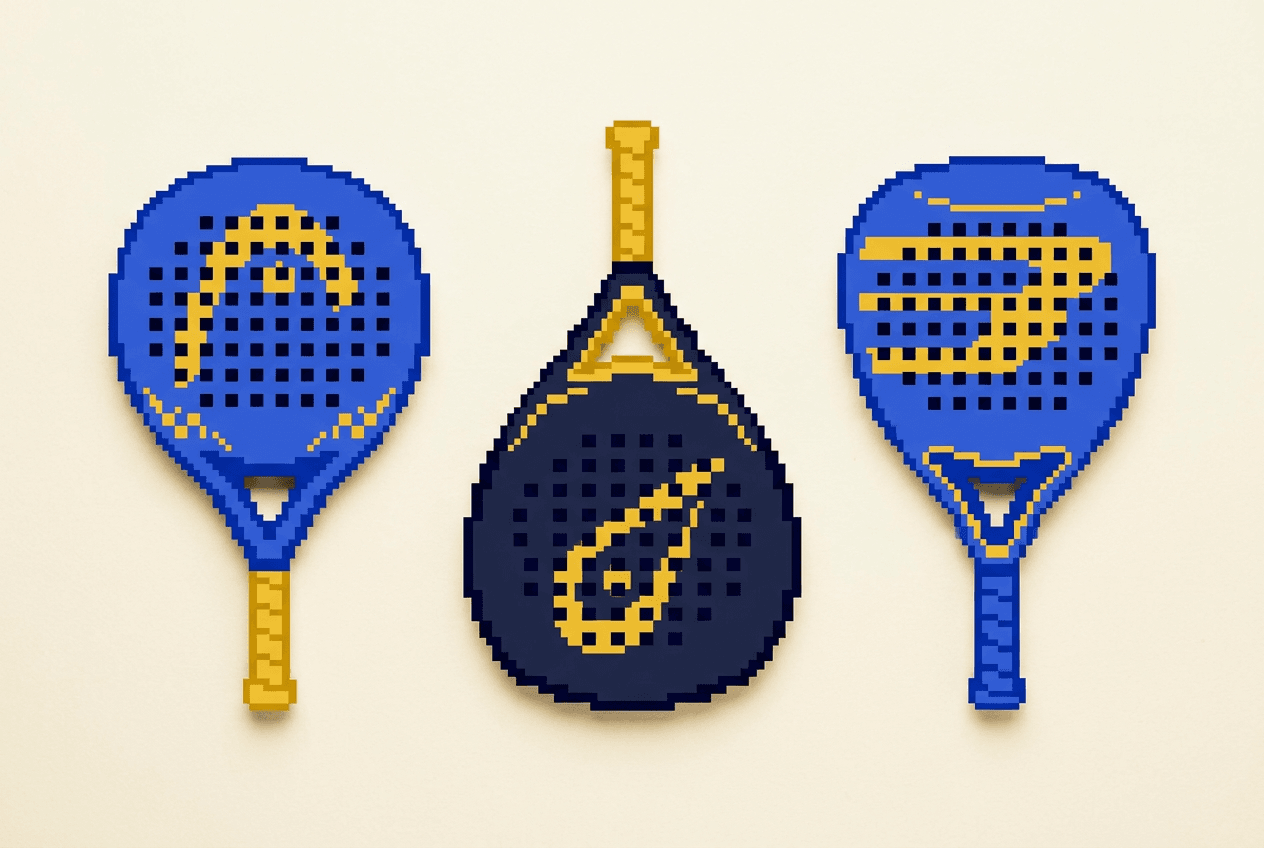
Choosing your first padel racket
The racket matters less than you hope and more than you fear. It won't add levels to your game — but the wrong one slows your learning and can hurt your elbow. Here's the short version of what to look for.
Shape decides your forgiveness
Round rackets carry the sweet spot low and in the middle of the face: big margin, easy control, comfortable on off-center hits. Diamond shapes push the mass and sweet spot to the top: more smash power, but a small sweet spot that punishes everything else. Teardrop sits in between.
Until you win points on placement at the net, control wins you more matches than power. Start round; earn the diamond later.
Weight and balance
Most adult rackets sit between roughly 350 and 375 grams. Lighter and head-light means faster hands at the net and less strain on the arm; heavier and head-heavy means more punch but later contact and a tired shoulder. If in doubt, go lighter — you can always add a few grams of lead tape later.
Soft core or hard core
Softer foam gives comfort, touch and easy depth at club swing speeds. Hard cores have a higher power ceiling but demand fast, clean technique to wake up — below that they just feel dead and rattle your elbow. Club players are almost always better served by medium-soft.
What to spend
Between €60 and €120 buys everything a developing player needs. The €300 flagship doesn't contain your improvement — it contains carbon you can't use yet. Spend the difference on a few lessons and fresh balls; that money converts directly into level.
When to upgrade
Upgrade when you hit the sweet spot consistently and genuinely run out of pop on your overheads — for most players that's after a season or two, not after a month. Your racket should always be slightly 'too easy' for you; that's what lets you swing freely.